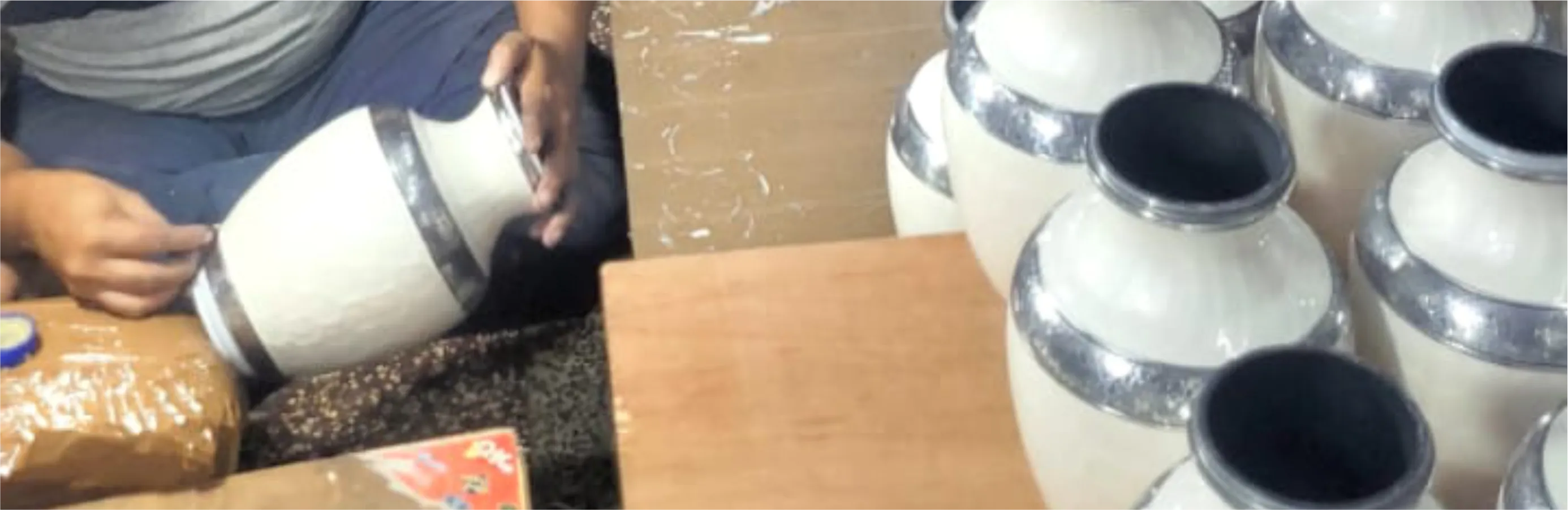

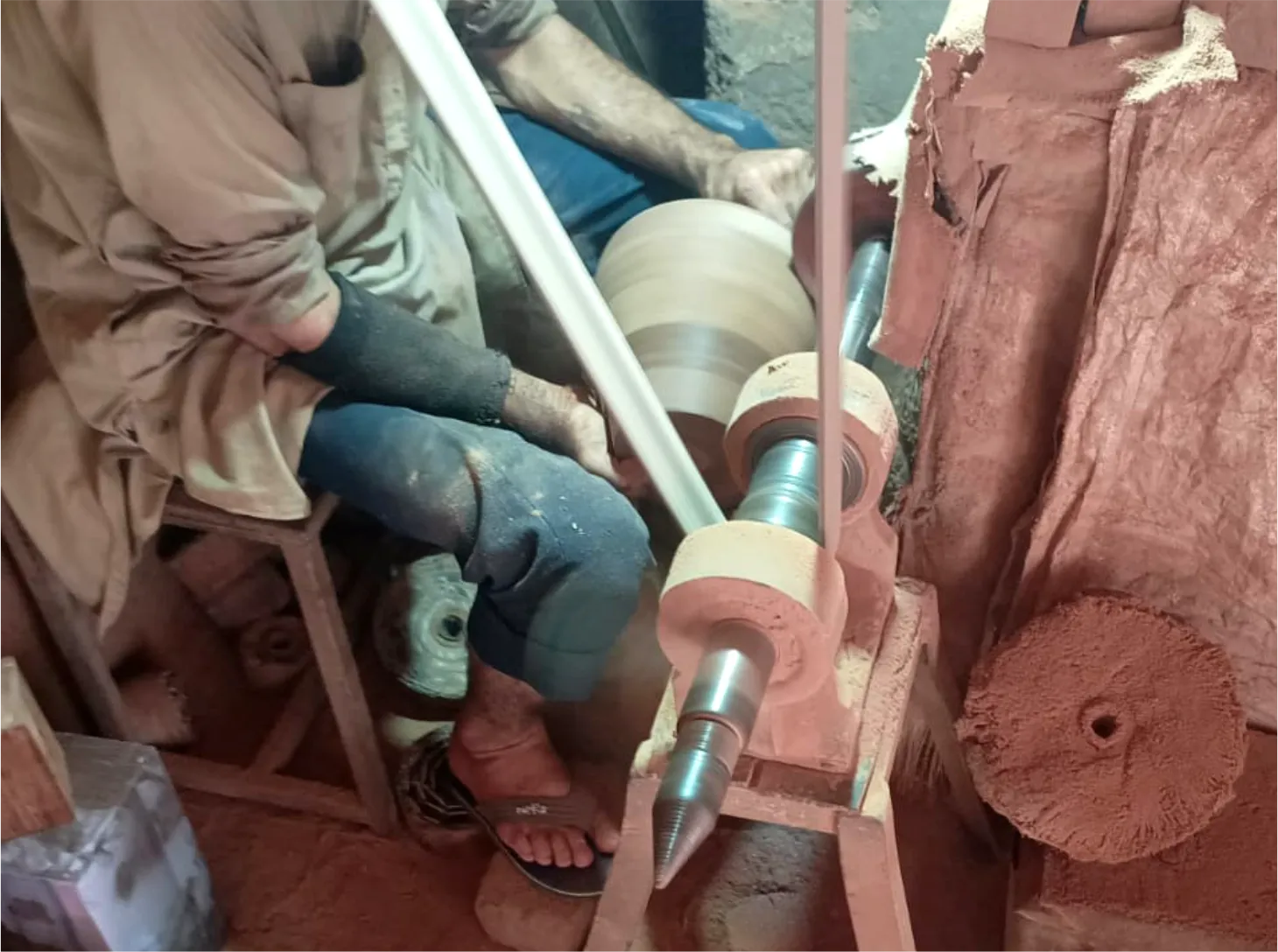
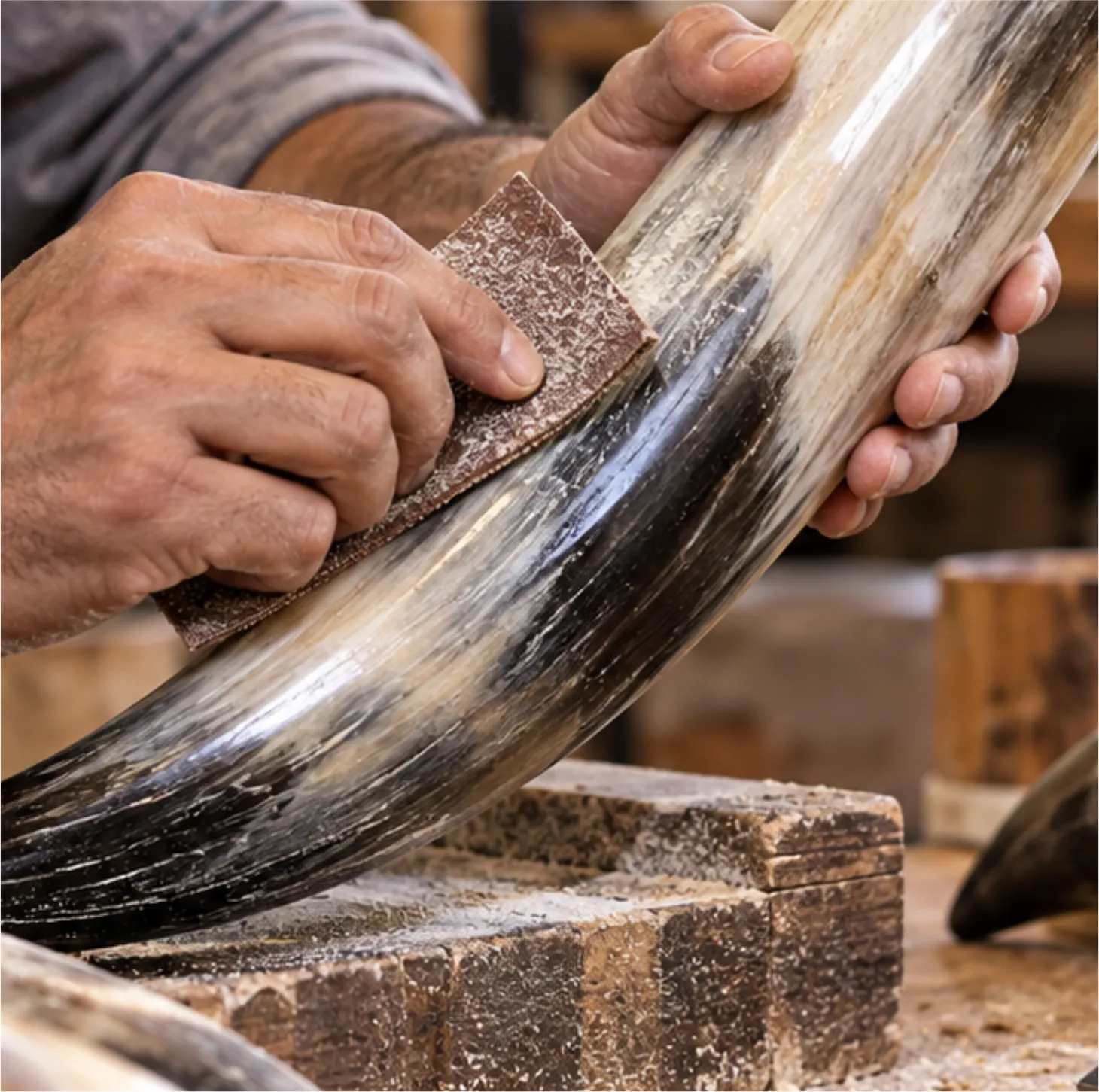
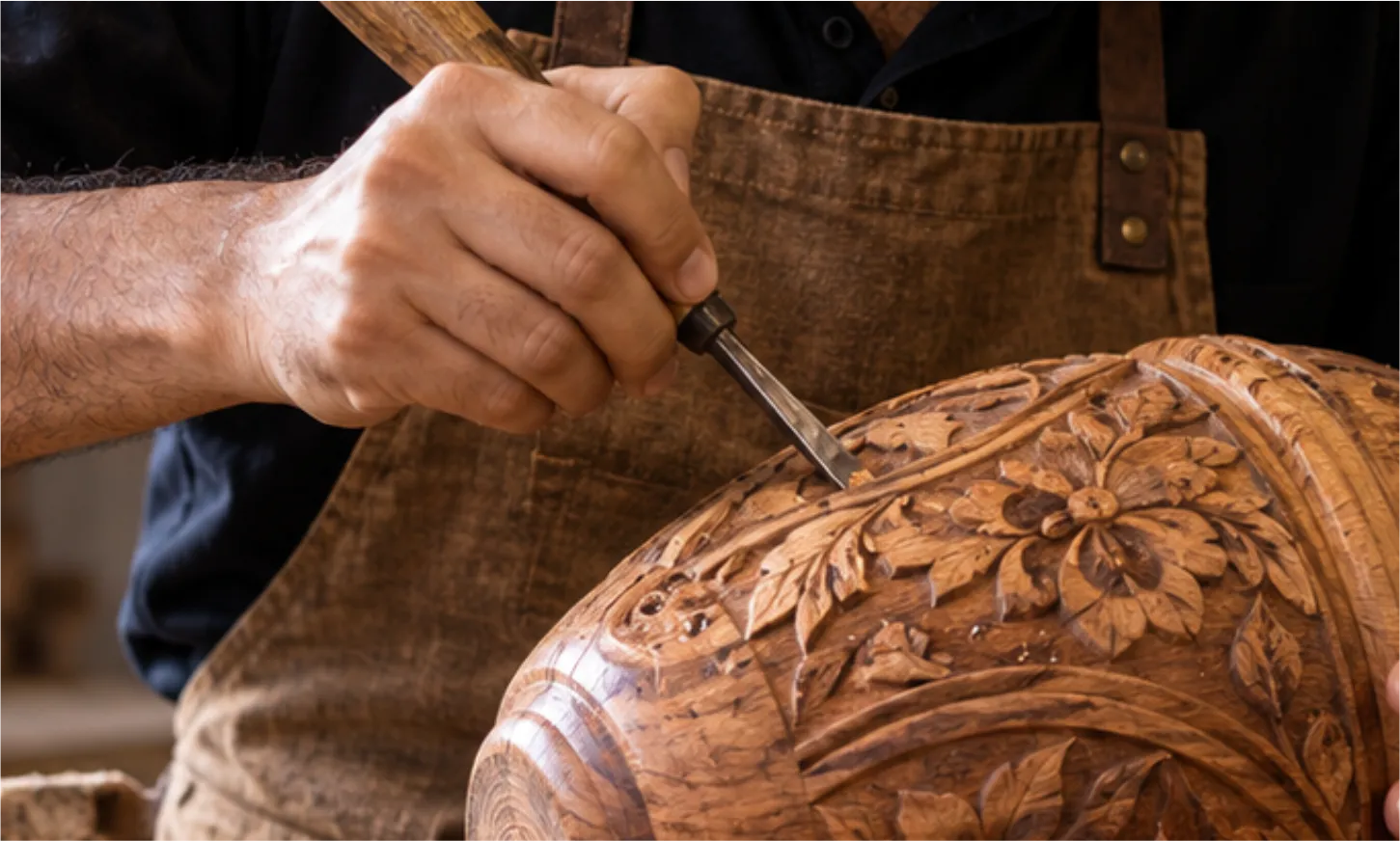
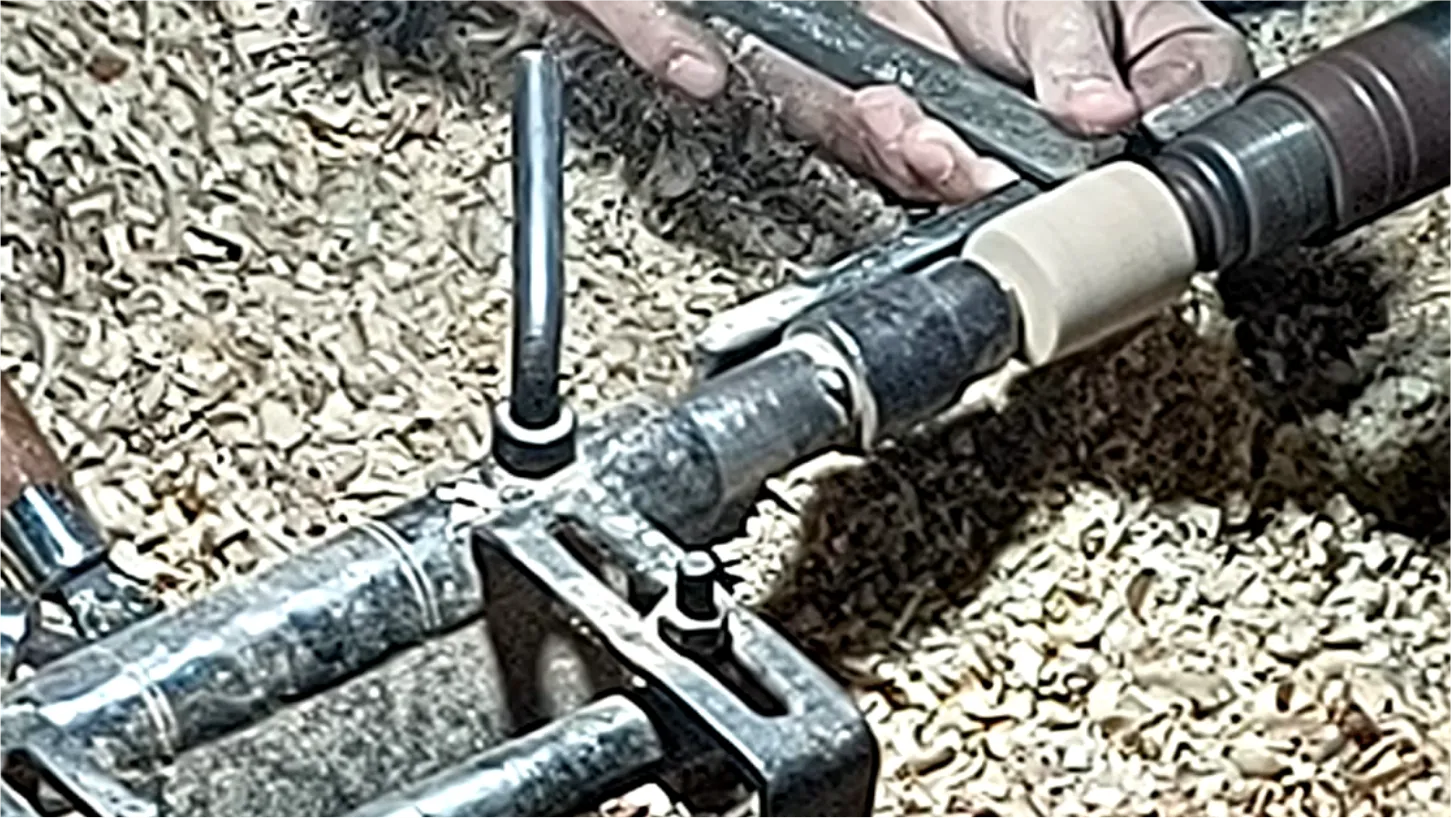
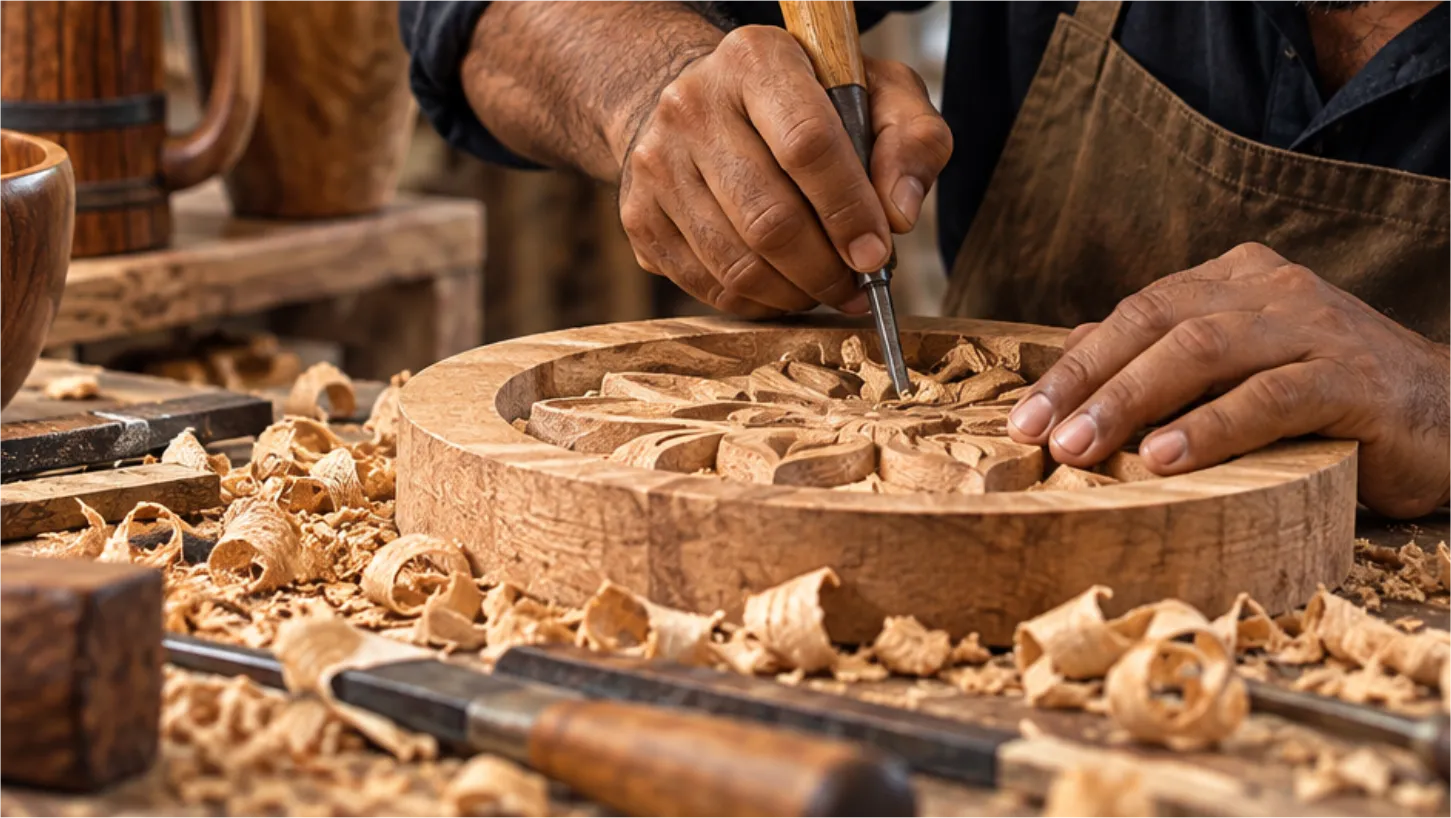
Material comes first. Natural horn, selected wood, aluminium metal detailing each respond differently to cutting, shaping, carving and finishing. Before a piece reaches the workbench, it is selected for the characteristics that matter to the finished product — structure, surface, colour, grain, thickness and workable form.
Because these are handcrafted and, in several ranges, naturally formed materials, no two pieces are expected to look completely identical. Natural colour, grain, pattern and surface character may vary, while the key dimensions, construction, finish quality and functional requirements remain controlled across the batch.
For buyers, the origin of materials is a key aspect of the selection of the correct supplier. That is why we maintain our sourcing strategy transparently, also keeping in mind the origin of natural materials in our products and their utilization.
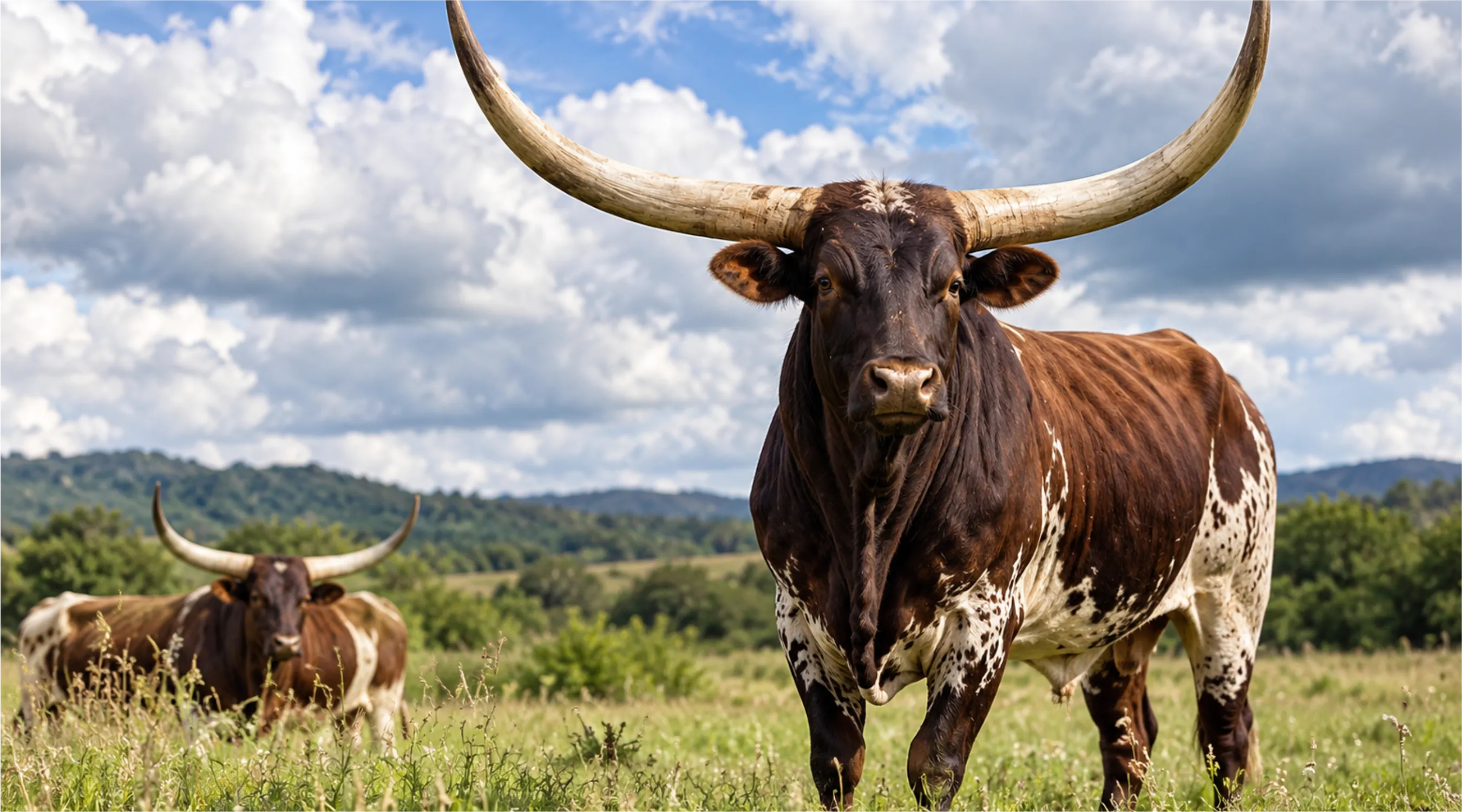
Ox and water buffalo horn is a by-product of the meat industry, so the animals are reared to be slaughtered, and the horns harvested afterwards. The horn can then be cleaned, prepared, and utilized to make other products like drinking horns, mugs, glasses, and other traditional products instead of going to waste. We source this material from suppliers who gather on the meat trade, but not from any source where an animal is killed with the intention of harvesting its horn.
Since the horn products that we use are made using the material of domestic cattle and water buffalo, we do not source horn from wild, endangered, or protected animals. Some of the materials that we do not use in our product range are rhino horn, ivory, and tortoiseshell. This will enable us to deal with natural horn and leave buyers with the information on the origin of the material.
The same attention is given to the other natural materials employed in our collections. Wood and other materials used are based on the type of product, the purpose of the product, and the finish needed.
Most defects in finished horn goods were already present in the raw stock. Grading hard at the gate is cheaper than rejecting at packing.
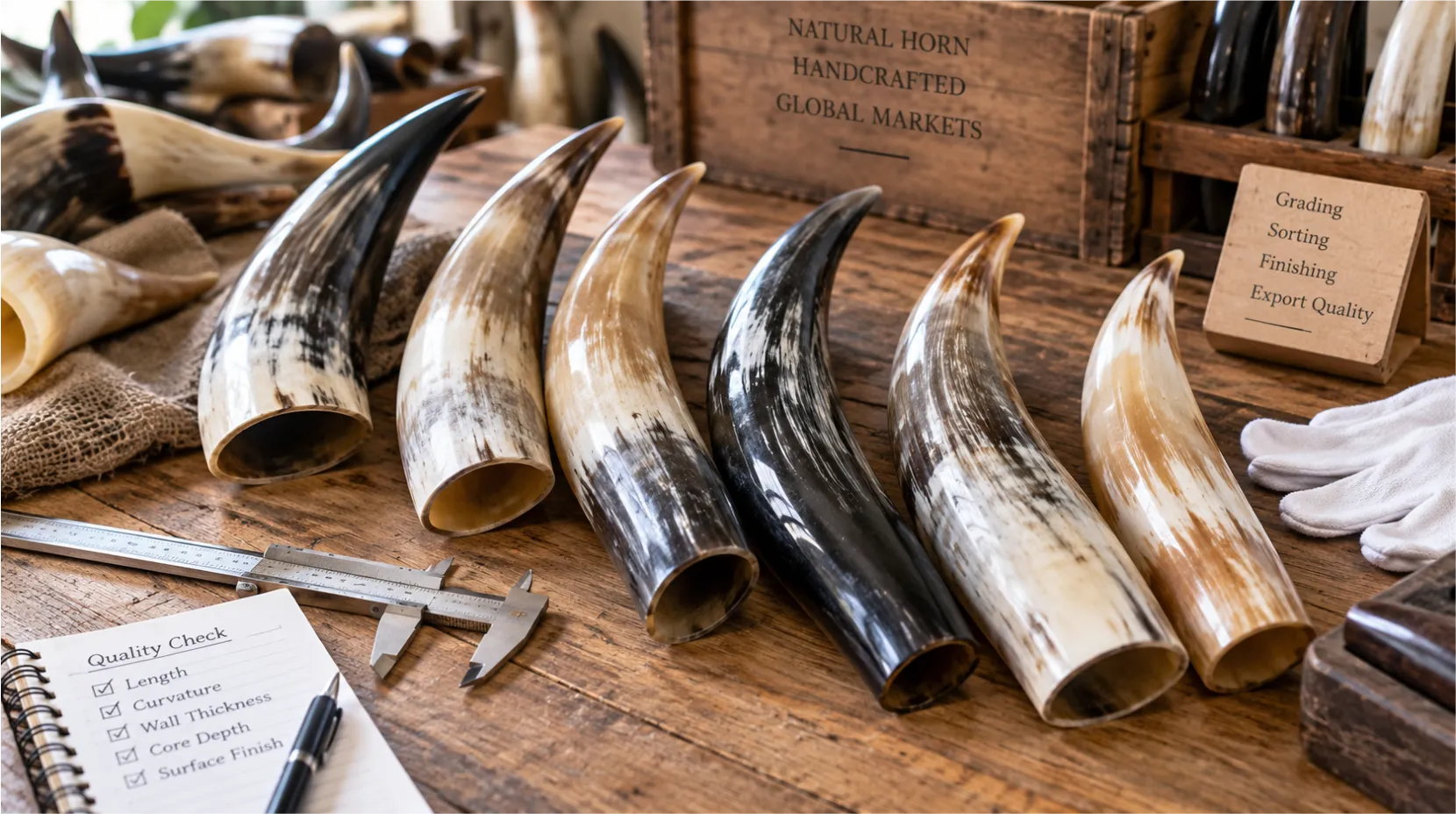
The workhorse of the drinking range. Lighter and more translucent than buffalo, with amber, cream and grey banding that no two pieces repeat.
| Attribute | Detail |
|---|---|
| Origin | Meat-trade by-product, sourced through regional horn merchants |
| Graded on | Length, curvature, wall thickness, core depth, absence of splits |
| Rejected for | Hairline cracks, hollow core running too deep, wall under minimum gauge |
| Used for | Drinking horns, beer mugs, shot glasses, tankards, horn bottles |
| Character | Translucent when held to light; colour bands run with the grain |
| Care | Hand wash cool, dry immediately, never dishwasher or boiling liquid |
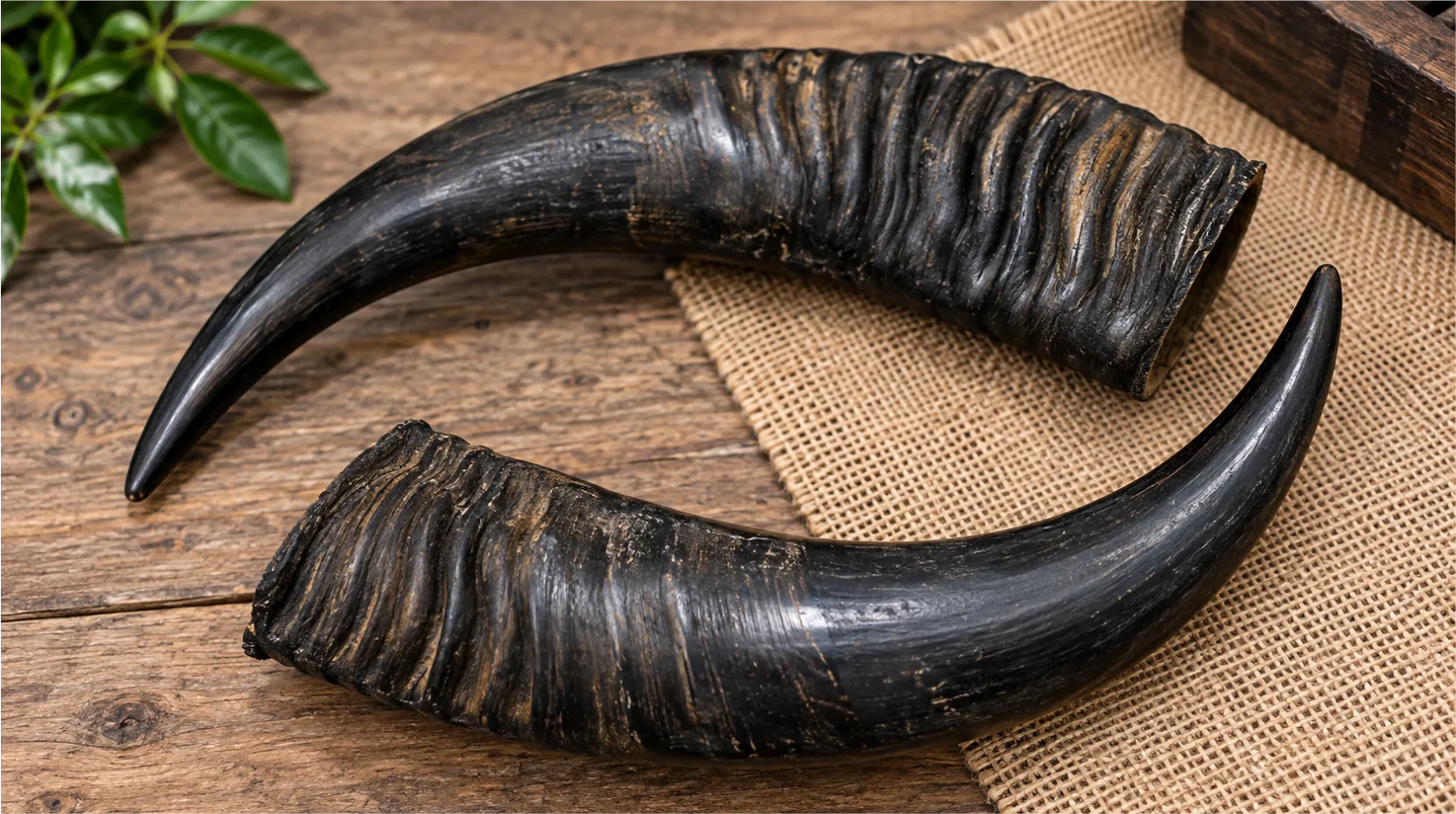
Darker, denser and noticeably heavier. Where a customer wants weight in the hand and a near-black finish, this is the material that delivers it.
| Attribute | Detail |
|---|---|
| Origin | Meat-trade by-product, domestic water buffalo |
| Graded on | Same criteria as ox, with tighter minimum wall for large-capacity pieces |
| Rejected for | Soft or fibrous core, uneven density, delamination at the base |
| Used for | Large tankards, heavy drinking horns, blowing horns, premium engraved pieces |
| Character | Deep charcoal to black, less translucent, higher polish achievable |
| Care | As ox horn; the darker surface shows water marks more readily |
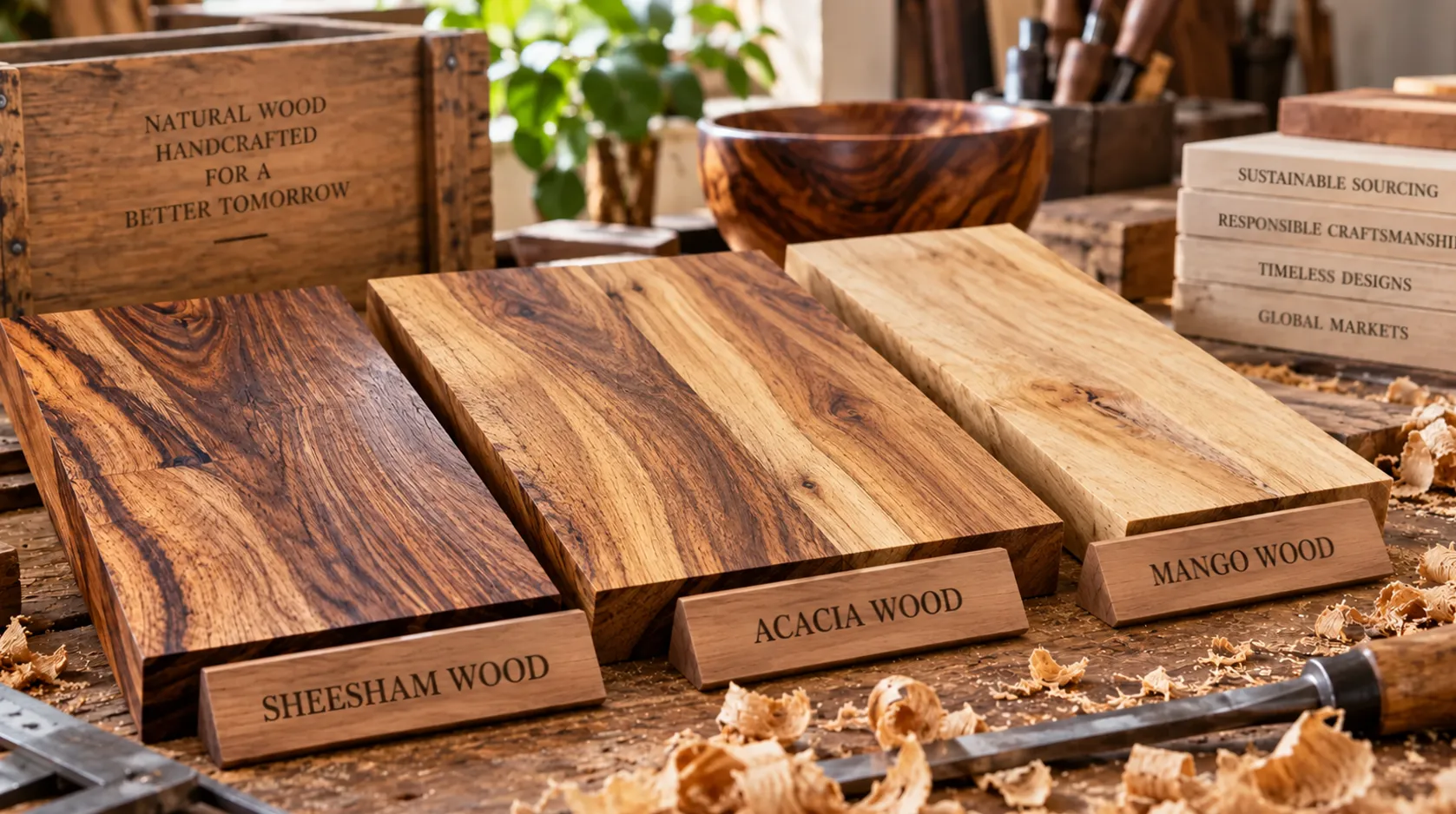
Sheesham offers dense grain for precise carving, mango provides a lightweight timber ideal for large, turned shapes, and acacia adds extreme durability with natural moisture resistance for heavy-use items.
| Attribute | Detail |
|---|---|
| Origin | Local timber yards in and around the Nagina cluster |
| Preparation | Kiln-dried to stable moisture before any blank is cut |
| Graded on | Moisture content, straightness of grain, absence of knots in the turning zone |
| Rejected for | Case hardening, live knots, insect damage, warp after drying |
| Used for | Urn bodies, mugs and tankards, ship wheels, yarn bowls, winders, crochet hooks, stands |
| Finish | Natural oil rather than film lacquer, so the surface can be re-oiled rather than stripped |
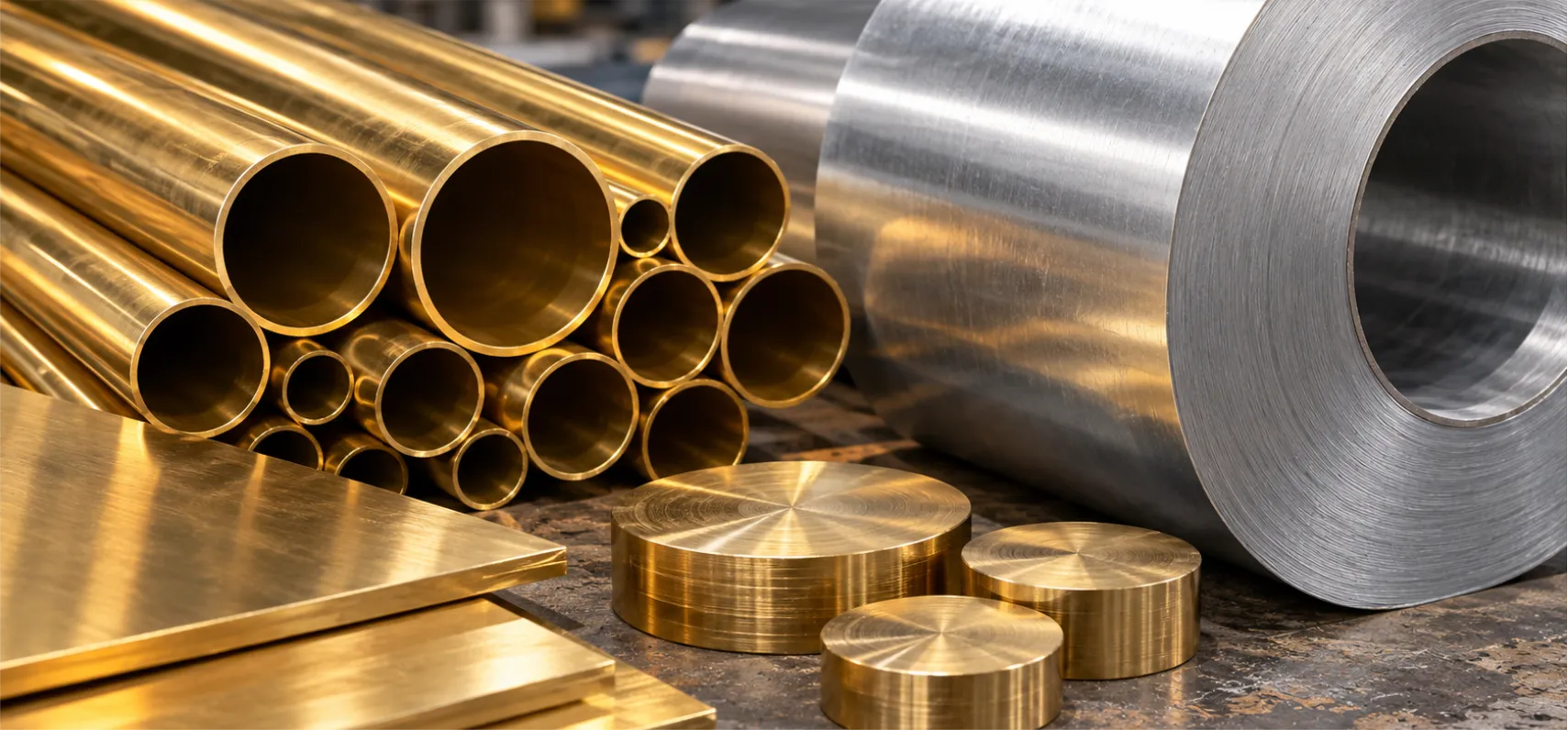
Bought as sheet and spun on our own lathe. Keeping this in-house is why a rim can change from brass to steel between sample one and sample two.
| Attribute | Detail |
|---|---|
| Origin | Sheet stock from Indian metal suppliers |
| Formed by | Metal spinning, trimming, threading, then polish and lacquer |
| Graded on | Sheet gauge consistency, surface free of pitting or rolling marks |
| Used for | Urn bodies and lids, horn rims and edging, stand rings, threaded closures |
| Finishes | Polished, brushed, antiqued or powder-coated to your reference |
| Note | Lacquer protects the polish; unlacquered brass will patina, which some buyers want |
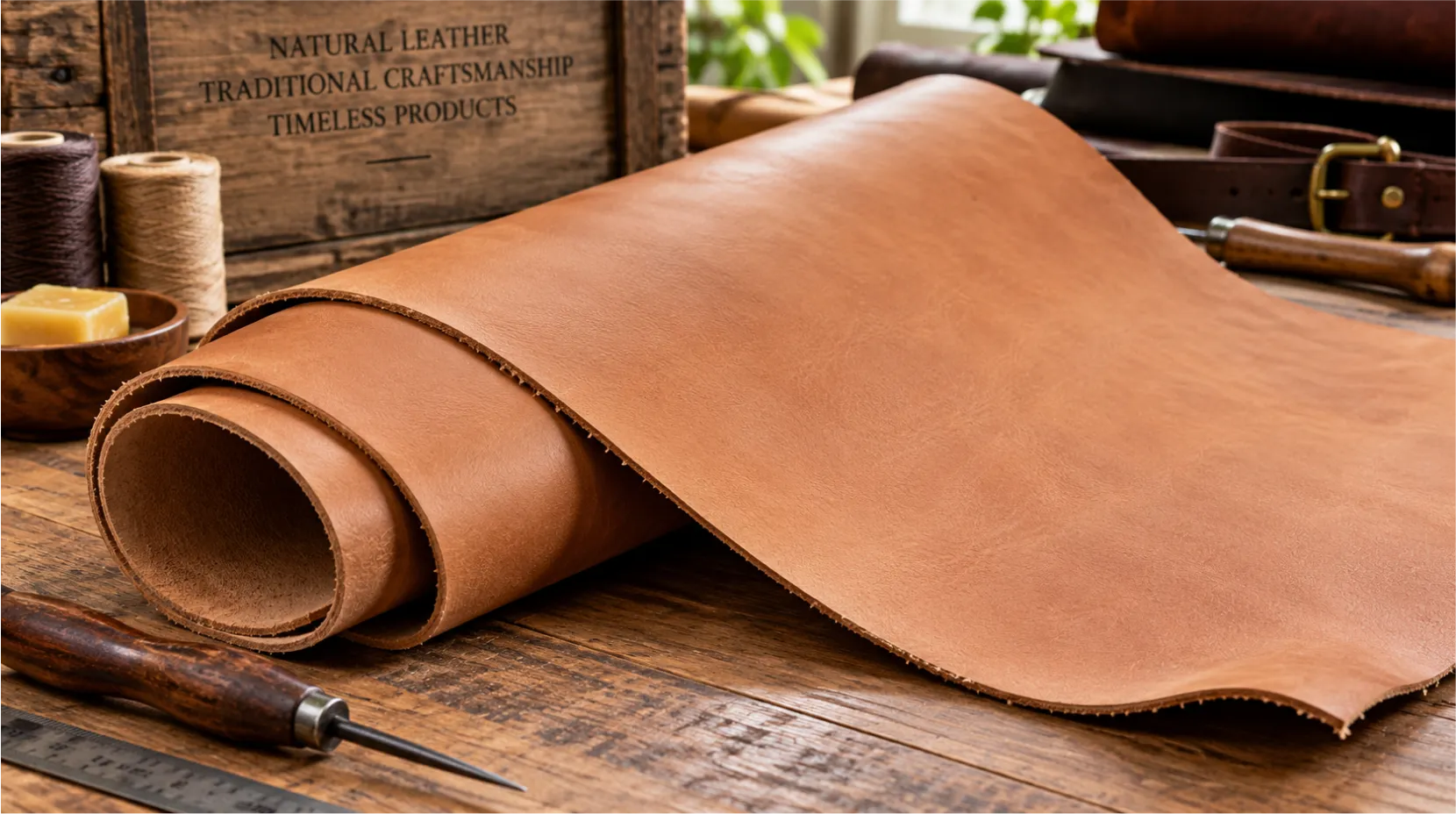
Bought already tanned, then cut, dyed, punched and stitched here. Vegetable tanning is chosen because it ages instead of cracking.
| Attribute | Detail |
|---|---|
| Origin | Indian tanneries, vegetable-tanned hide |
| Graded on | Thickness consistency, absence of scarring in the cutting area |
| Used for | Drinking horn holsters, belts, blowing horn carry straps, stand ties |
| Finishes | Natural, brown, black, or dyed to a reference swatch |
| Character | Darkens with handling and sunlight; each hide takes dye slightly differently |
| Care | Wipe dry, condition occasionally, keep away from direct heat |
These are the skills a machine cannot replace at our volume — and the reason a horn from this workshop looks different from a moulded one.
Raw horn is heated until it becomes workable, then pressed into the curve or straightness the order calls for and held until it cools and sets.
Judgement is everything here. Too little heat and the horn cracks under the press; too much and it scorches and loses colour. There is no dial for it — the turner reads the material.
Wood and horn are cut on the lathe by hand, not by CNC. The turner follows the grain, thins the wall progressively, and stops by feel when the section is right.
This is why our wooden mugs have a slightly different weight from a mass-produced one, and why we cannot promise two pieces will be identical to a tenth of a millimetre.
Laser for logos, barcodes, fine text and repeatable artwork across a run. Hand engraving for runes, crests and deep-cut work where a laser looks flat.
Engraving is always the last operation. Applying it before polishing would fill the cut with compound and soften every edge. Wood and horn are cut on the lathe by hand, not by CNC.
Brass and aluminium sheet is spun over a form on a lathe to produce urn bodies, rims and rings — no press tooling and no minimum tooling charge.
The practical benefit for you is that a new urn profile costs a new form, not a new die, so short custom runs stay economical.
Interiors are scraped clean, then sealed with a food-safe lining so the vessel holds liquid without imparting taste. Exteriors run through a grit progression and onto the buffing mop.
Wood is oiled rather than lacquered, which means an end customer can refresh the surface at home..
Hide is cut to pattern, edges bevelled and burnished, holes punched, then stitched and riveted for holsters, belts and straps.
Burnishing the edge is the step most workshops skip. It is also the first thing that fails on a cheap holster after a season of use. Wood and horn are cut the lathe by hand.
Any of these can be combined across a single order. Send a physical reference or a photograph and we will match to it at sampling stage.
| Material | Available Finishes | Effect on Lead Time |
|---|---|---|
| Ox horn | Natural, high polish, matte, blackened, two-tone banded | Blackening adds 2–3 days |
| Buffalo horn | Natural, high polish, matte | No change |
| Sheesham / mango wood | Natural oil, dark oil, walnut stain, ebonised, wax | Stain and ebonise add 2–3 days |
| Brass | Polished lacquered, brushed, antiqued, unlacquered | Antiquing adds 3–4 days |
| Aluminium | Polished, brushed, powder-coated to RAL reference | Powder coat adds 4–5 days |
| Leather | Natural, brown, black, dyed to swatch, burnished edge | Custom dye adds 2–3 days |
Getting this in writing before an order prevents almost every dispute that horn goods produce. Put it on your own product pages too — end customers need it more than you do.