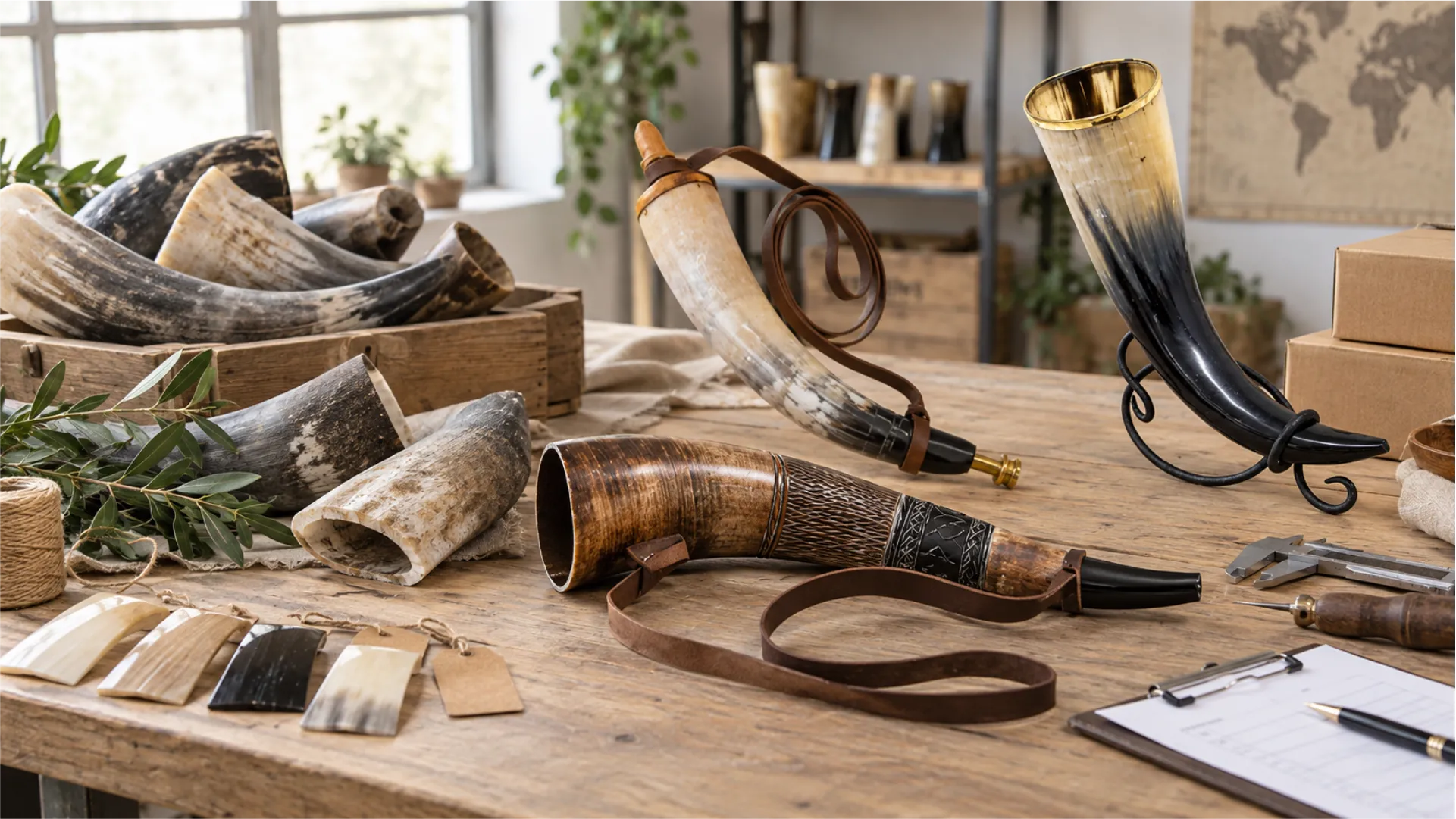
Every Viking horn mug that lands on a customer's table starts somewhere far less romantic than a Norse saga — usually in a tannery, a horn-processing yard, or a smallholder farm. For B2B buyers and manufacturers building a catalogue of VIKING Drinking sets, OX Horn Beer Mugs, or Buffalo Horn Beer Mugs, that starting point matters more than most product sheets let on. Sourcing badly doesn't just create ethical exposure — it creates inconsistent stock, customs delays, and brand risk that shows up months after the PO is signed.
This guide is written for procurement teams, wholesalers, and Viking Horns mug manufacturers in the United Kingdom who want a working framework for vetting horn suppliers, not just a feel-good statement for the "About Us" page.
A point worth stating plainly upfront: legitimate horn used in drinkware is a slaughter byproduct, not a hunting trophy. Water buffalo and cattle are raised primarily for meat and dairy; the horn is harvested after the animal has already entered the food chain. This is true whether you're sourcing a VIKING Water Buffalo Horn for an engraved showpiece or the raw stock for an OX Natural Skin Horn Beer Mug.
The distinction matters commercially. Buyers who understand this can ask sharper supplier questions:
A horn supply chain that only works on paper falls apart the moment a retail partner, customs officer, or ethical-sourcing auditor asks for backup. Manufacturers producing VIKING Horn Glass sets, shot glasses, or full VIKING Drinking sets for export need documentation that holds up, not just a supplier's word.
At minimum, your sourcing file should include:
Suppliers who resist providing this aren't necessarily acting in bad faith, but they're a liability you're inheriting, not just a line item on a quote.
In Viking-age Scandinavia, horn wasn't just tableware — it was raw material for combs, spoons, buttons, and even early lantern panes, since thinly shaved horn is naturally translucent. Drinking horns were often the last item cut from a horn, using the widest, least-damaged base section, which is part of why a genuine Natural Skin Horn with Stand still commands a premium today — the best portion of the horn was always the most contested.
Turning a raw horn into a finished VIKING Horn Bottle with a metal lid or an engraved drinking set is where ethical sourcing either pays off or falls apart. A horn that's been improperly cured cracks under heat-shaping; horn from mixed or unverified lots produces visible inconsistency across a batch — a real problem when a UK retailer orders 500 matching units.
Manufacturers should expect a compliant supplier to hand off horns that've already been:
From there, finishing decisions – a VIKING Horn With Iron Stand, a VIKING Horn With Leather Belt Strap or a fully VIKING Horn with Engraving treatment – become design choices rather than damage control.
For any manufacturer exporting to or operating within the UK and EU, understanding CITES (the Convention on International Trade in Endangered Species) is non-negotiable. Domestic water buffalo and cattle horn are not CITES-listed materials, but the paperwork trail matters because customs authorities don't take a supplier's word for species identification — they take documentation.
A manufacturer who can produce clean certification for a shipment of Buffalo Horn Beer Mugs moves through customs faster, wins retail contracts that require ethical-sourcing declarations, and avoids the reputational hit of a shipment held or rejected at the border. This paperwork also protects you contractually — if a supplier misrepresents origin, your certification file is what separates your business from liability.
A well-processed water buffalo horn typically yields more than one finished piece. The wide base might become a mug or a VIKING Blowing Horn With Leather strip, the mid-section becomes shot glasses, and offcuts are often repurposed into buttons, handles, or knife scales elsewhere in the leather and craft trade. Low-waste processing isn't just good ethics — it's usually a sign of an experienced, cost-efficient supplier.
If you're comparing horn suppliers or manufacturing partners for the first time, a few patterns tend to separate the ones worth a long-term contract from the ones that cause headaches by the second shipment:
Green lights:
Red flags:
Ethical sourcing in the horn trade isn't a marketing layer you add after the product is made — it's the thing that determines whether your VIKING horn-engraved sets, drinking horns, and beer mugs are consistent, compliant, and safe to sell at scale. Manufacturers who treat traceability as a core process, not paperwork for its own sake, end up with fewer returns, fewer customs delays, and stronger relationships with the UK retailers and wholesalers who are increasingly asking these questions before they sign a contract.
If you're a retailer, wholesaler, or brand looking to source Viking-inspired drinkware from a manufacturer who can actually answer these questions – species verification, origin documentation, and finished-product consistency – that's the conversation worth having before you commit to a bulk order.
Reach out to discuss your specifications, request sample batches, and see the sourcing documentation for yourself before it becomes your problem to solve.