Eco-friendly and biodegradable urns are becoming in big demand in all markets of the world with families opting to use them when honouring their loved ones. However, to manufacturers and exporters, this rising demand is accompanied by a complicated problem, which is to adhere to international compliance regulations of biodegradable materials. Exporting of urns is not as easy as packing and shipping them because of customs documentation, material safety standards among others, one has to plan well to prevent delays, rejected shipments or penalties imposed on the company due to noncompliance.
In this blog, we would cover how an urn is eco-friendly, the compliance challenges faced by exporters, and how they can overcome them.
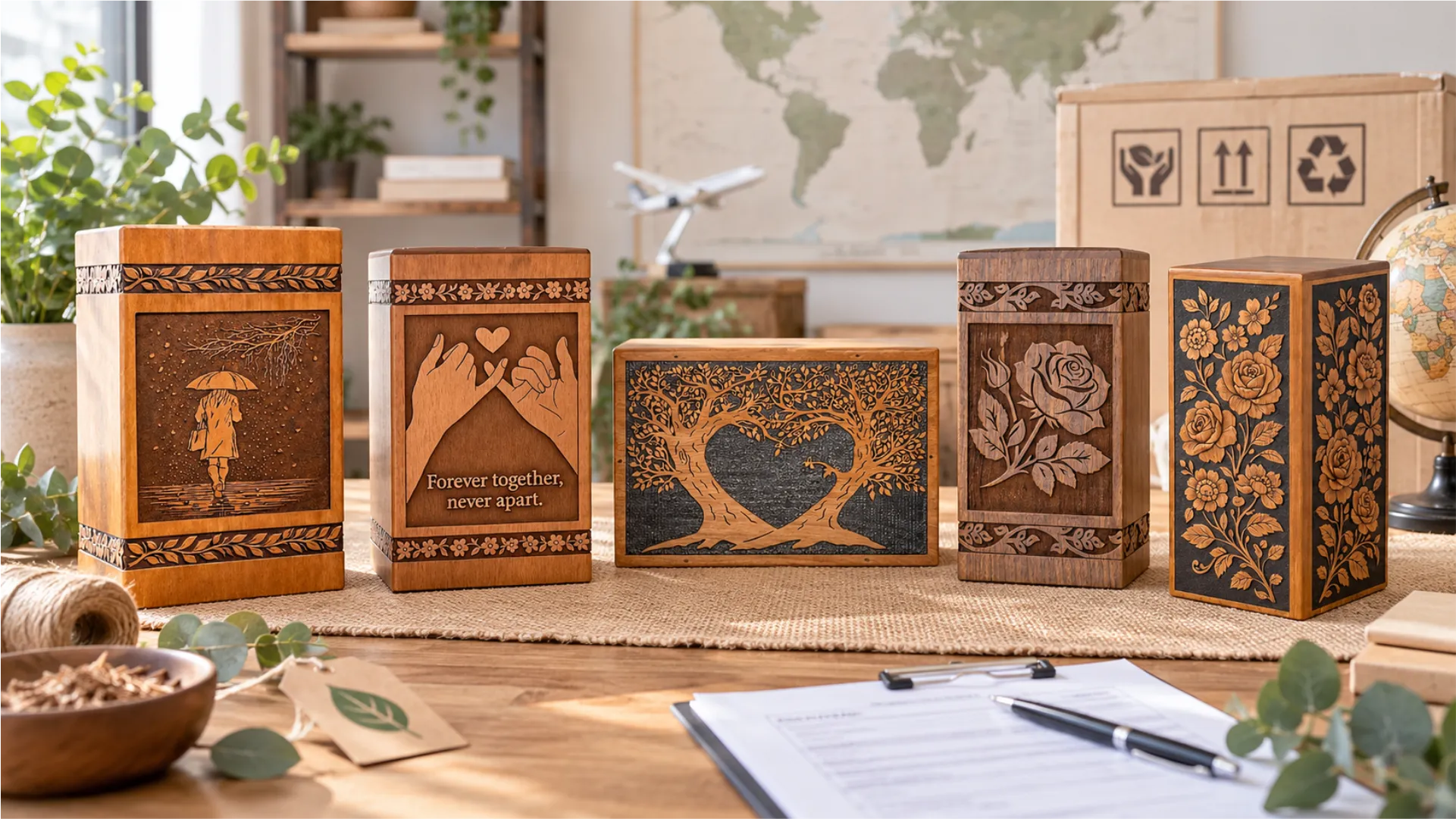
The common materials of eco-friendly urns are biodegradable materials such as bamboo, bioplastics that are comprised of cornflour, recycled paper, salt or natural clay. Contrary to conventional metal or ceramic urns, the materials are degradable and thus suitable for the burial of the dead or water scattering rituals, which are eco-friendly. Nonetheless, in addition to biodegradable products, there are a significant number of consumers who would prefer long-lasting items such as iron urns or aluminium urns as long-term gifts, a fact that exporters need to consider when compliance is concerned.
The sustainable urns market is dynamic and changing rapidly due to the changing consumer values and environmental consciousness. The following is what is defining the future:
|
Material Type |
Biodegradable |
Common Use |
Compliance Considerations |
|
Bamboo/Cornstarch |
Yes |
Water/ground burial urns |
Must meet biodegradability certification standards |
|
Iron Urn |
No |
Long-term keepsake, decorative |
Subject to metal import duties and material testing |
|
Aluminium Urns (Large Cat) |
No |
Pet cremation urns |
Requires material safety documentation for export |
|
Recycled Paper |
Yes |
Scattering or burial urns |
Needs eco-certification for customs clearance |
|
Ceramic/Clay |
Partially |
Keepsake urn, decorative urn pot |
Fragility packaging standards apply |
In contrast to typical decorative items, the urns containing human remains or the cremation urns frequently become subjects of more stringent importation restrictions since they are linked with the processing of human remains, even in their empty state. Include biodegradable material claims in the mix and exporters undergo further scrutiny which includes:
Biodegradable urns produced out of natural resources such as salt or bamboo are able to fully decompose within months, as opposed to traditional metal urns, which can take decades or even centuries to decompose. That is the reason why the exports of sustainable urns are increasing at a high rate in Europe and North America.
Challenge 1: Irregular Material Certification Countries have varying biodegradability evidence.
Solution: Collaborate with testing labs that offer internationally accepted certification that can be used in the various markets.
Challenge 2: Customs Delays Through Misclassification Sometimes, the Urn is misclassified, thus causing an unwarranted delay.
Solution: Make sure that proper HS (Harmonised System) codes are applied depending on the type of material and intended use
Challenge 3: Damage in Packaging during Transit Biodegradable materials such as cornflour composites may be delicate
Resolution: Reinforced and moisture-resistant packaging with specifically designed eco-friendly urn materials
Challenge 4: Differing Importation Rules on Human Remains-Related Products The additional examination of urns of human remains is imposed by some countries
Resolution: Collaborate with logistics companies that are familiar with compliance paperwork related to this type of product.
As the terms 'biodegradable' and 'eco-friendly' become the latest buzzwords in the marketing community, not all urns that claim to be so are truly eco-friendly and sustainable. Buyers, particularly bulk importers and retailers, must have an evident means of differentiating between real and greenwashed products.
Did you realise that some biodegradable urns are actually modelled to dissolve in water within a few minutes when scattering ashes into the sea? This eco-innovation has gained popularity among the coastal communities and environmentally friendly families in the UK and beyond.
With the increasing demand of both conventional and sustainable products, such as iron urns and biodegradable keepsake urns, the exporters need to develop compliance structures that are flexible, taking into consideration the diversity of materials. This includes keeping up-to-date certification files, collaborating effectively with the custom brokers and keeping up with the changing international environmental laws concerning the exported goods.
Classic Collection UK7 Ltd has established itself as an authoritative brand in the Urns Manufacturers in United Kingdom with a variety of products such as keepsake urns, iron urns, aluminium urns and biodegradable urns that are designed to support sustainable cremation efforts. We know that each export shipment is not only a product but also a duty. That is why compliance and quality are at the forefront of all that we produce.
With our presence as an established urns exporter in United Kingdom, we collaborate closely with our foreign counterparts to ensure that all deliveries of goods, from cremation urns to specially made keepsakes, comply with the destination country's laws without causing unnecessary delay.
Exporting environmentally friendly urns should not imply working out the complicated regulations of biodegradable materials on your own. At Classic Collection UK7 Ltd, 'sustainable craftsmanship' and 'export-compliant' mean that your keepsake urns, cremation urns and biodegradable collections cross international boundaries without any delays and without any paperwork hiccups.
You need eco-friendly urns to bury the ashes of a loved one, personalised keepsake urns, or bulk export orders placed; our team will make sure each product is of the correct material and compliant with the country you are exporting to.
Get in touch with Classic Collection UK7 Ltd today and discover why we're a trusted name among Urns Manufacturers and Exporters in the United Kingdom. We can turn your next export shipment into a smooth, compliant and stress-free operation.